PLENARY SESSIONS

Keynote – RANIA JAWAD
“Getting a Signal”: telecommunications, women writing, and our contemporary genocide
In this talk, I want to focus on two aspects that have been integral and visceral experiences for many Palestinians subjected to genocidal warfare since 2023: gaining access to telecommunications and the act of writing. By telecommunications I refer to the transmission of information via landline, cellular, and Internet signals, and my interest is specifically on reasons it has been necessary to maintain access to communication networks beyond the purpose of documentation and broadcasting of Zionist genocidal violence. Thus, learning which areas the Israeli army plans to invade or bomb, knowing if family are alive or martyred, to being notified of food aid, being able to locate essentials such as tents or health services, to accessing one’s bank account, to being able to sit for a university exam, to knowing where the points of charging a phone battery are located while enduring multiple displacements—are some examples of how the need to get a signal is an everyday, intensified visceral experience. As the ongoing genocide is globalized with regards to it perpetrators (including multi-national tech corporations), and its global public of witnessing, to bring our focus to the ground of the ongoing everyday and its material and immaterialities of communication is an attempt to stay close to those subjected to extreme forms of settler-colonial, capitalist, structural violence. My focus on the act of writing emerges from working to archive a small portion of the massive amount of writings from Gaza in the face of genocidal erasure, particularly by women, as one means of listening to their everyday and the language they forge to articulate the present that drives our future.
Rania Jawad is an assistant professor in the Department of English Language and Literature at Birzeit University (BZU), Palestine. She served as Director of the Institute of Women’s Studies at BZU and its MA program in Gender and Development Studies from 2021-2024. Her research examines dynamics of performance and cultural production particularly in Palestine. Her recent publications and work focus on women’s writing from Gaza during the genocide, the production and politics of testimonial writing, and transnational investments in Palestinian artists as development workers. She is the editor of Walls of Cloth, a collection of Nima Hasan’s writings during the first year of the genocide, forthcoming in 2026 (Arabic), an excerpt of which has been translated into English; co-editor of The World We Once Knew is Past: women’s testimonials from Gaza, forthcoming in 2026 (Arabic and Portuguese); and co-author of “Against Frames of Trauma and Testimony: Palestinian Children’s Narratives from within a Contemporary Genocide,” Journal of Palestine Studies, 2025.

Keynote – SOPHIE LEWIS
When Real Feminists Do Fascism
In recent years, “white feminism” and girlboss feminism have taken a justified beating. We know that leaning in won’t make waged exploitation any more tolerable and that “nice white ladies” have proven to be, at best, unreliable antiracist allies. But in a time of rising fascism, accelerating settler-colonial genocide, ceaseless attacks on reproductive justice, and violent transphobia, we need to be clear that making certain feminisms more “inclusive” is a terrible idea. We have to be willing to fight and defeat certain feminist kin if we want to build the feminist world we all need. In this lecture, Sophie Lewis issues a love letter to feminism by refusing to accept it as an inherent political good. Only when we acknowledge “enemy feminisms,” she suggests, can we adequately reckon with the ways these ideologies have pushed their exponents toward anti-liberatory horizons.
Sophie Lewis is an independent feminist scholar living in Philadelphia, who hails originally from the UK, France, and Germany. Before becoming a full-time freelance writer, Dr. Lewis studied literature, politics, and the environmental humanities, earning her four degrees at the universities of Oxford, Manchester, and the New School for Social Research in New York.
Today, she is a recognized theorist of care communization and queer utopias whose work has been translated into many languages. Her essays appear everywhere from the London Review of Books to n+1, and anyone is welcome to enroll in her short philosophy courses, taught online at the Brooklyn Institute for Social Research.
Sophie is the author of Full Surrogacy Now: Feminism Against Family (2019), Abolish the Family: A Manifesto for Care and Liberation (2022), Enemy Feminisms: TERFs, Girlbosses and Policewomen Against Liberation (2025), and the essay collection Femmephilia (Haymarket, June 2026). Her next book, The Liberation of Children, is forthcoming from Penguin (2027).
You can follow or support Sophie’s writing at: patreon.com/reproutopia or lasophielle.org

Plenary Roundtable
QUEER LIVES IN MOTION: LGBTIQ+ Activism, Exile, and Solidarity Across Borders
This plenary roundtable brings together LGBTIQ+ activists from different regions who are currently living in various EU countries as a result of migration, displacement, or exile. Drawing on diverse lived experiences, the discussion will examine the specific challenges that queer activists face when navigating forced or chosen mobility, including legal insecurity, social isolation, loss of political space, and the reconfiguration of activism in new contexts.
Beyond focusing on activism alone, the roundtable will reflect on broader forms of queer solidarity that emerge in exile, including care, community-building, cultural work, and informal networks of mutual support. It will explore how experiences of migration reshape political engagement, identities, and relationships, and how solidarity can extend beyond formal advocacy structures to sustain lives and movements over time.
As a plenary session, the roundtable aims to centre voices that are often marginalised in policy, academic, and institutional debates, offering critical reflections on exile not only as a condition of vulnerability, but also as a space of agency, resilience, and collective imagination.
Moderator: Evgeny Shtorn
Speakers:
Beryl Ohas is a senior commercial attribute scientist, author, and human rights advocate championing LGBTQ+ people in the diaspora, migrant rights, and inclusive communities through advocacy and storytelling.
Dima Starover is a human rights activist and artist. Co-founder of ZHUK, a project that supported the safe evacuation of politically persecuted people from Russia. He worked with international organizations on emergency assistance for queer people and activists across Central Asia and Eastern Europe. As a theater maker and sound artist, he creates performances exploring state violence, political repression, and queer experience.
Hüseyin Ali Kudret, LLM, is an independent researcher, jurist and human rights activist, formerly a qualified attorney in Turkey. They work at the intersection of legal research, advocacy and practice, are active in various human rights organisations, and serve in NJCM’s Treaty Reporting Working Group, Psych AID’s advisory board and the steering group of Women in Refugee Law (WiRL).
Raneen Feidi is a Palestinian queer activist based in Dublin. They hold a degree in Human Rights and a postgraduate degree in Gender, Sexuality, and Culture from University College Dublin. They have been involved in grassroots activism with AlQaws for Sexual and Gender Diversity in Palestinian Society. In Ireland, they have previously worked at LGBT Ireland as a Research and Policy Officer. Ranin has gone through the Irish asylum system and has continued their community building on queer activism and Palestine solidarity across Palestine and Ireland, over the past few years.

Film screening
RIGHTING WRONGS: Unfairness, Mistreatment and Catharsis in New Trans Cinema
TITE (Trans Image/Trans Experience) Film Festival, Ireland’s festival of trans and non-binary cinema, brings a wide variety of cutting edge Irish and international trans film to the heart of Dublin. TITE’s festival programme celebrates trans creativity, energy, and life, while also making space for thorny and uncomfortable films which speak to the hardships and complexities of trans life.
Reflecting on the conference theme Thinking Gender Justice, this screening curated by TITE director James Hudson collects five films from the TITE 2025 and 2026 festival programmes, centering trans people who feel they’ve been ignored, wronged or harmed, and the complicated ways they choose to escape or transform their traumas.
This screening will be followed by a panel discussion with filmmakers Liadán Roche and Hiram Harrington, moderated by TITE Film Festival director James Hudson.
The TITE Film Screening is open to conference presenters and registered attendees only. Places are limited. Booking is free but required due to venue capacity. Book your ticket here
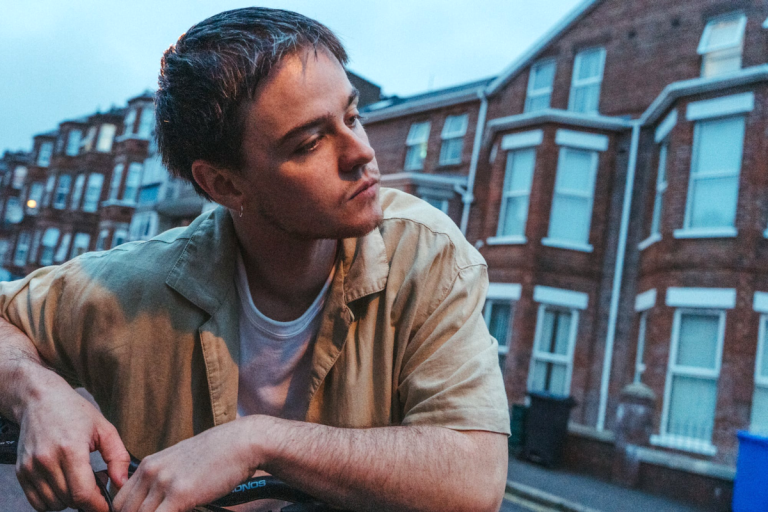
Purebred (2025, Northern Ireland, 15’)
Dir. / Writ. Caleb J. Roberts
During a heatwave, a trans man returns to the flat of his on-off-again lover after taking a pregnancy test.
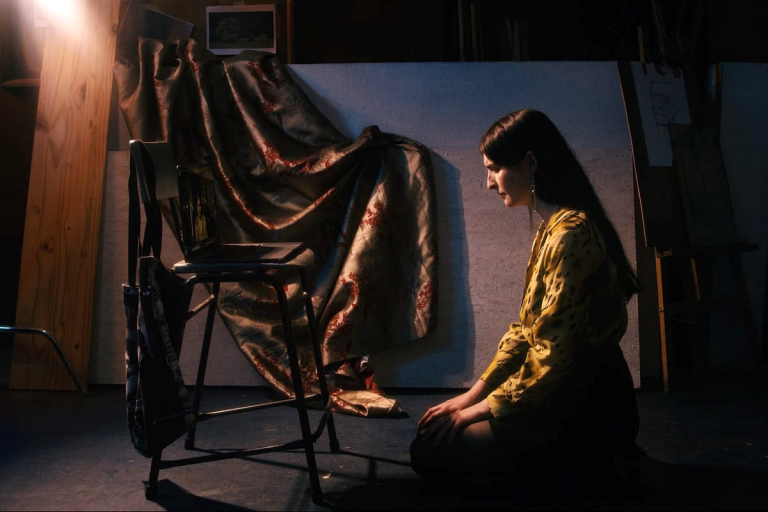
Terratoma (2024, Ireland, 24′)
Dir. / Writ. Liadán Roche
A trans woman tries to recreate a traumatic relationship for a film project.
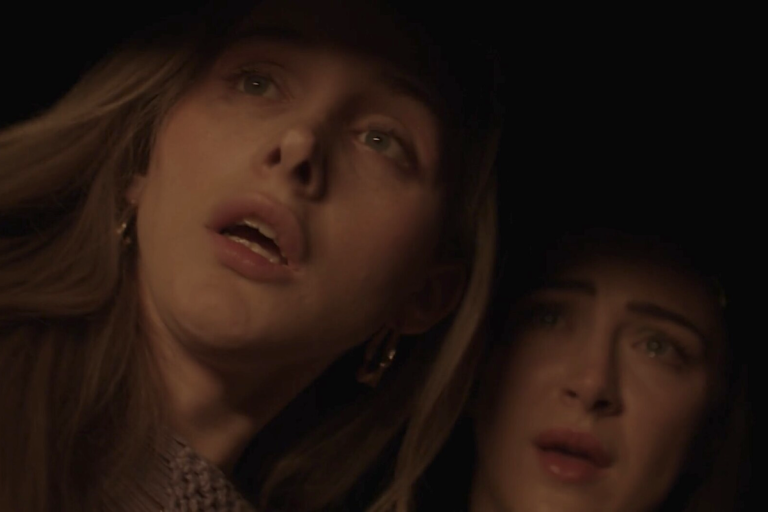
CHASER (2026, UK, 10’)
Dir. / Writ. Jesse Williams
A trans woman on a night out crosses paths with a charming stranger, but he may not have her best interest at heart.
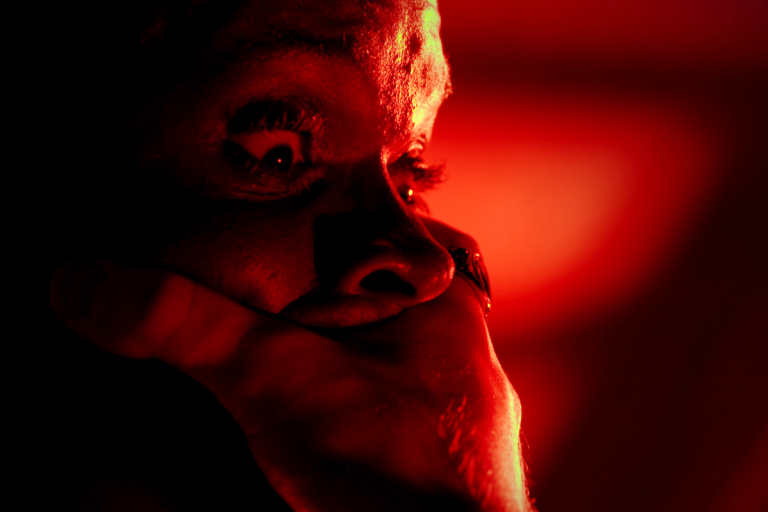
Glory, Hole (2023, Ireland, 17′)
Dir. / Writ. Hiram Harrington
At a night club glory hole, one man with scissors prepares to castrate his rapist, while another feverishly tries to talk him down.
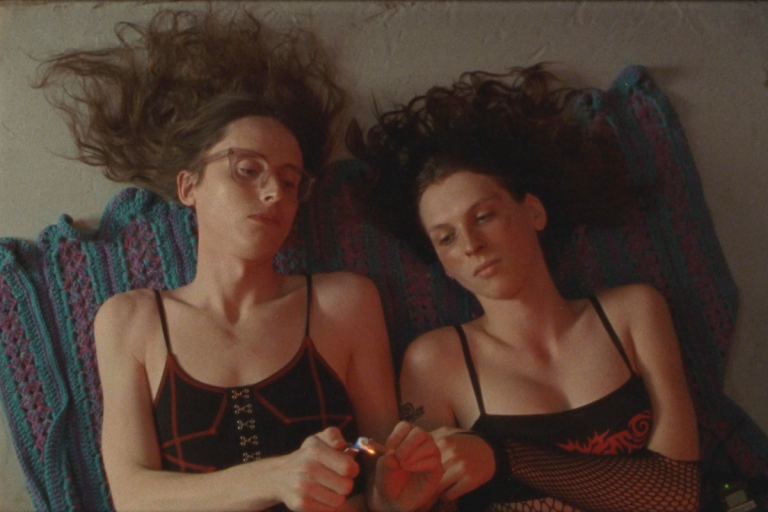
Sydney & Kim (2024, USA, 20’)
Dir. / Writ. Hazel Katz
While Sydney is recovering from a major surgery, her best friend Kim cares for her at a motel. As Kim’s flirtations with the motel manager escalate, Sydney’s resentment boils over.